

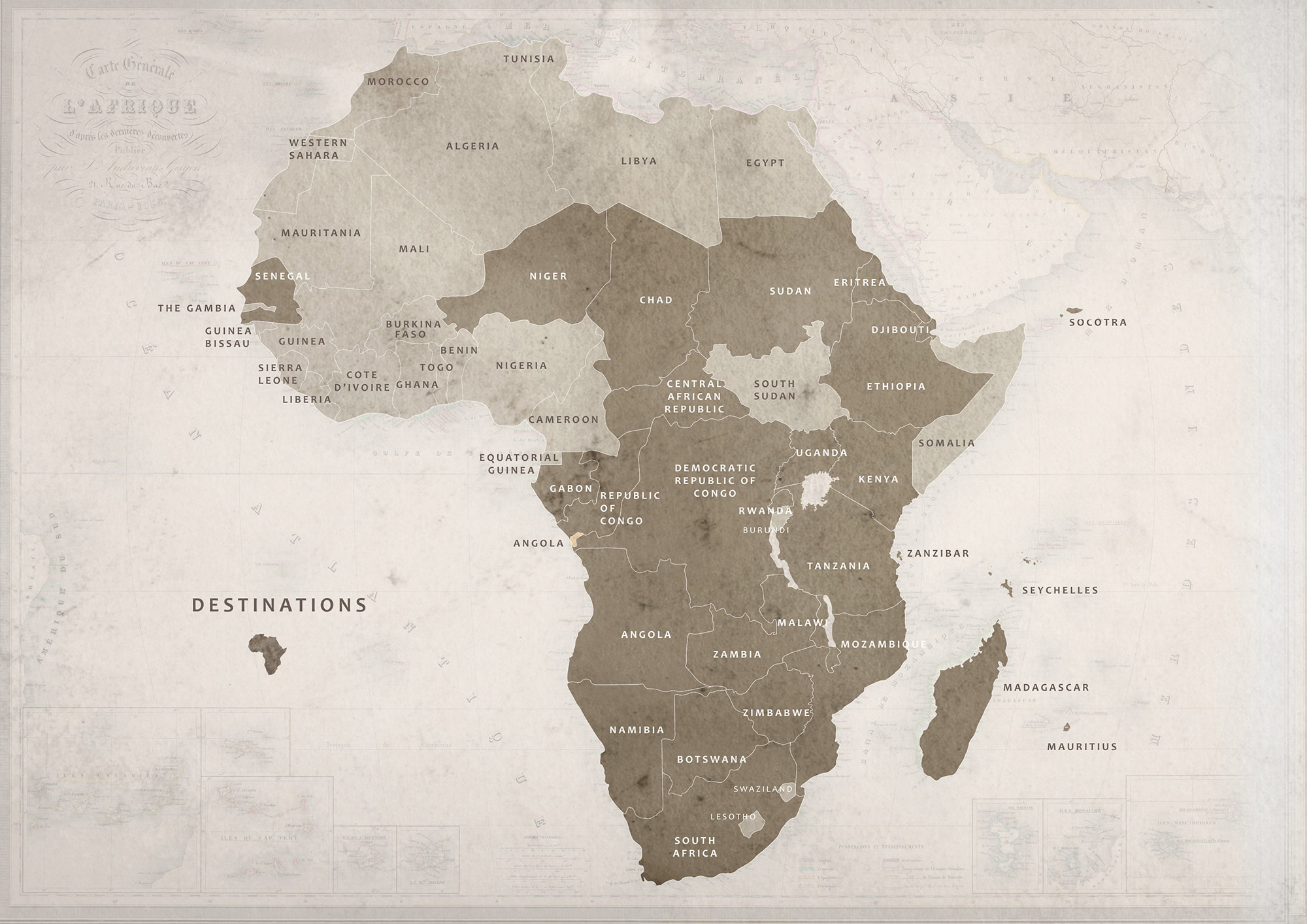
Through travel we can experience the unfamiliar and learn to embrace it. We can remember to trust our instincts. The possibility of all that might be is like catnip to the curious and there is a freedom that comes in setting off on an adventure, the more unknown, the more rewarding.
As humans we are naturally storytellers, it is what connects us and in nature we find the greatest stories. Time spent in the wilderness deepens the relationship we have with our environment. Journeys into the natural world can be both educational and playful while importantly they support the people and wildlife who call those places home. It is possible to travel with both purpose and freedom and the transformative power of such journeys can be extraordinary.
Rather than the conventional country calling cards I have outlined some of the cast of characters instead. Who and what lures us, the great game. Focusing upon experiences while allowing space for the unexpected, ensures that you are in the right place at the right time and with the right people.
Wonders of Nature
Cats & Dogs
There is a primal fascination that we have with the planets predators and none more so than the big cats. From the time we walked the forests and plains until we learnt to outcompete them, we have been drawn to their wildness and purity of purpose.
The predator guild is one of the cornerstones of a healthy eco-system and there are many places to see these iconic species. All of the classic safari countries have their special areas and some of the more famous include the lions of the Serengeti Mara, cheetahs in the Kalahari and the leopards of the Luangwa Valley.
Space on the planet is at a premium and tragically there may only be 20,000 lions left alive while cheetahs teeter at less than 10,000 in the wild. The persecution of canids continues across the world however there are still some viable populations.
With 5,000 remaining the African wild dog has found a stronghold in the Okavango Delta and the Ethiopian wolf, the continent’s most endangered canid with approximately 500 individuals, still survives in the Bale mountains.
Elephants, Rhinos & Whales
Majestic barely does justice to the largest mammals that walk the earth or swim the oceans and seeing them in the wild is truly awe inspiring.
From the giant herds of northern Botswana to the super tuskers of Tsavo, forest elephants at Dzangha Bai, Namibian desert elephants and Amboseli matriarchs under the shadow of Kilimanjaro; it is impossible to spend time with elephants and not be effected by their intricate communication, presence and deep social connection.
The whales of the world are now protected although their ocean home remains under threat. The colder waters of Africa’s coastline however continue to provide incredible sightings; of southern right whales in the seas off Hermanus, orcas in South Africa’s False Bay and humpbacks singing and breaching in the Gulf of Guinea or off the coast of Madagascar.
Brought back from the edge of extinction, Africa’s two rhino species have become flagship animals. While finding rhinos in the wild remains tricky, there are many privately managed areas protecting them and the conservancies of the Sabi Sands and Laikipia are among the best.
Great Apes
We have come a long way and yet crouched on the forest floor among a family of gorillas or a chimpanzee community our ancestral roots are plain to see. Humbling, educational and inspiring are some of the words used when in the company of our great ape cousins.
Trekking to see our closest relatives is remarkable for many reasons, not least of which is the intimacy of the encounter. All on foot, at the same level, up close and personal.
Mountain gorillas may be the headliners and indeed time spent with a family in the Virunga Volcanoes of Rwanda and the DRC or in Uganda’s Bwindi Impenetrable Forest is one of the great wildlife moments.
The lowland gorillas of Odzala however are no less impressive and the chimpanzees of the Mahale Mountains provide arguably the most educational of all safaris. For what could teach us more than learning about ourselves.
Tigers & Bears
As a professional safari guide it may come as no surprise that I love tracking wildlife. From India to the Arctic, I have travelled in search of the planet’s largest land based predators. There is little that can prepare you for your first sighting of a tiger, grizzly, Alaskan brown or polar bear. I do not claim to be the world’s expert in these habitats however I know the experts, the best in the business, guides, conservationists and friends.
I have been to all of these places and would be happy to help you plan a trip, alternatively I could simply introduce you to my address book. This is where I go on holiday and like all good things they are better when shared.
Long in lore the tiger remains the world’s most enigmatic big cat. Despite there being only 4,000 animals, tiger conservation is making successful strides and nowhere more so than the historic Ranthambore reserve.
Perhaps less written about the great bears are equally as impressive; walking with grizzlies in interior British Columbia, Alaskan browns feeding on salmon in the Katmai peninsular and polar bears in High Arctic Svalbard, this is northern wildlife at its finest.
Migrations
Back to Africa and the one time it is ok to follow the herd. The spectacle of thousands upon thousands of large mammals moving across the plains of the Serengeti Mara is one of nature’s most dramatic events. While much of the film coverage has focused on river crossings, the real beauty is simply being out there, on one’s own among herds of wild animals stretching away as far as the eye can see. The key as always is location because the clue is in the name, they migrate and so must we.
Be that to the southern short grass plains early in the year when up to 400,000 wildebeest cows give birth, or the annual roaring rut of the males way out west. Driven by food the herds slow down and spread out over the southern hemisphere winter when they get to the fields of red oat grass in the northern reaches of the Serengeti Mara. The sheer volume of wildlife combined with sightings of the attendant predators in action makes for a truly epic safari.
With well over a million animals in motion the Serengeti Mara leads the pack and nowhere else on earth do large animals concentrate in such numbers although running a close second is the kob migration of the Sudd and Gambella. The zebra migration on the Makgadikgadi Pans is not to be sniffed at and perhaps the most extraordinary, certainly less well known, is the Kasanka migration of up to eight million fruit bats and the sardine run off the South African coast where shoals up to 5kms long can spotted, the water whipped into a feeding frenzy by dolphins, gannets, sharks and whales.
Deserts & Mountains
I grew up in the desert and there is a deep peace to be found in the more remote parts of the globe, whether that is high on a mountain pass or in that hole on the map. Wilderness is something that we crave, perhaps without realising it however it is a word often used and yet rarely experienced. Something happens when you turn that corner on a mountain trek and you distinctly leave the rest of the world behind. The same is true when you wake up in the desert, dwarfed by the immensity of scarcely inhabited landscapes.
Africa is home to many such places. They offer challenges and are not always comfortable however maybe that is rather the point. They require effort and yet they are achievable. At 19,300ft (5,800m) Kili is as high as most of us will ever hike. Is it fun, not really, is it an incredible sense of accomplishment, absolutely. Just down the road and at a respectable 17,000ft (5,200m) Mt Kenya has some of the most beautiful trekking in the region. Further afield, Nyiragongo is an active stratovolcano that houses the largest lava lake in recent history and yes, you can hike to the crater rim.
The Sahara may be the most famous of the world’s great deserts and is the largest hot desert. Disappearing into the Air or Tibesti mountains, the Ennedi massif or the Tenere desert is not for everyone however for those who want to disconnect and slow down, this is as good as it gets.
More accessible, the ancient dune seas of the Namib and the untouched Kalahari showcase an unbelievable diversity of habitats and life for those looking to get off the beaten path.
Aliceblue
The ocean is bigger than us, that much seems obvious. It is always the same ocean and yet every day it is different. It connects us, there is peace in a far horizon, joy in its bounty and when we learn from it there is freedom to be found.
Whale sharks, swimming with dolphins, pristine reefs, kitesurfing, whale watching, great whites, penguins, healthy waters and empty beaches; the sheer beauty of life and diversity of activities to be experienced within Africa’s coastal Indian Ocean is remarkable.
Of course we are talking about a large area, from the Lamu archipelago, via the Spice islands and the Quirimbas to False Bay, Mauritius and Madagascar. The Indian Ocean has always connected people. Favourable trade winds and rich marine life have helped cultures flourish. 25% of the world’s biodiversity hotspots are situated either within it or along its coastal margins.
This vast region has something to offer everyone and, while it is often either a header or footer to a classic safari, it is worthy of a journey in its own right. Working with marine biologists, dive masters and kiting instructors this is another world to safari Africa and yet easy to combine.
Private villas on the Kenya coast with access to world class kitesurfing, swimming with whale sharks through the Spice islands from your own catamaran, diving on Mozambican reefs with no other people, exploring the markets, restaurants and watersports of Mauritius, watching great whites hunting off the Cape coast or humpbacks breaching off Madagascar’s beautiful beaches; this is the blue planet.
Dandylion
Travel in Africa, like the continent itself, is multi layered. While it is often the iconic wildlife that first draws us, it is the human connection that makes the story real. There is another side to going on safari, one of cultures both ancient and modern. It is an important side as the fragility of Africa’s wild spaces rests significantly in the decision making of the continent’s urban centres and each individual nation’s own people. As is only to be expected, there is a creativity, dynamism and beauty of the human spirit that helps paint the true picture.
These human stories are told in many ways, including art, music, dance, architecture and clothing. From therianthrope rock art in the Matobo Hills to the contemporary art of Khartoum, Saharan rock engravings, Benin bronzes, Ghanaian trading beads and Zimbabwe stone scultpures, the continent’s art history dates back thousands of years.
Likewise, music and dance is an integral part of traditional culture and spans the gamut. The trance dance of the San in the Kalahari, the Wodaabe’s yaake dance, Samburu singing wells, Sufi mystics in the land of Sheba, the adumu dance of the Maasai, the Zulu indlamu and Senegalese mbalax musicians all tell stories that bond their communities.
Meanwhile Ethiopia’s Orthodox architectural tradition includes Axumite rock stelae, the monolithic churches of Lalibela and is believed to be the resting place of the Ark of the Covenant. Stories abound in what was one of the world’s last empires and are best heard over buna in the birthplace of coffee.
Of course Africa is a continent on the move and while these art forms are fundamental to their communities there are equally inspiring places to visit in modern, urban Africa. The Dakar biennale, Ghanaian kente cloth and East African kitenge markets, the Timkat epiphany festival, Cape Town café culture and grooving with the Brazzaville sapeurs; these are adventures of the heart that ring true.
Lemurs & Evolution
With unparalleled levels of species endemism, Madagascar, the world’s fourth largest island, makes a case for being the eighth continent. It is an extraordinary pot of convergent evolution where over the last 80 million years everything there has evolved with little interference. Consequently, the diversity among the one hundred plus species of lemurs is astounding, from the haunting call of the giant indri to the acrobatics of the sifakas and don’t forget the puzzling aye-aye, the world’s largest nocturnal primate.
Needless to say there is more to Madagascar than lemurs and, with a staggering array of chameleons, butterflies, orchids, baobabs and birds, rainforests and tropical beaches, the island is a treasure trove for those raised on Gerald Durrell.
Following the evolutionary trail closer to home; whilst the jury is still out as to exactly where and when, it is clear that Africa is home to our earliest ancestors. For those interested in our first journeys then being hosted at the Turkana basin institute or camping in Sibiloi, the birthplace of Homo Habilis and perhaps human culture, is a truly wonderful look behind the scenes of our path to this date.
Similarly, exploring the cradle of humankind not far from Johannesburg with palaeontologists from the university of Wits is an equally fascinating dive into our past. The list goes on and between the Olduvai gorge in Tanzania and Ethiopia’s Afar triangle, home of Lucy; time spent in any of these sites with passionate academics puts our place on the planet into the truest perspective.
Wonders of Nature
While iconic species may have the starring roles, it can be the backdrops that steal the show. Africa is home to a fair share of the world’s natural wonders and even though they may be on the beaten path, they are still spectacular. The key as with planning any safari, is knowing where and when to go; a certain time, a particular point and the right story.
Disappearing into the vast oasis that is the Okavango Delta; long shadows and electric colours at Sossusvlei, among the red dunes of the Namib; getting drenched at Victoria Falls, the headquarters for world class white water rafting; the blush of millions of flamingos swathed around the horizon of Lake Natron and the Rift Valley lakes; Table Mountain standing sentinel over the restaurants and café culture of Cape Town.
The list is long and the above are merely some of the magnificent and yes, well known parts of the continent. As a Pan-African guide I know that despite our drive to always be the first, to see things that others don’t, these popular natural wonders are, not surprisingly, always different and always impressive.
Horses for Courses
In a previous chapter of my life I was a cavalry officer and I am always grateful for the opportunity to help guests see Africa’s wild spaces from horseback. A riding safari is of course unlike anything else; equal parts adventure, immersive wildlife safari and bygone romance; for those who enjoy riding at any level then this is a must.
From multi day safaris across the plains of the Mara or crossing the watery wilderness of the Okavango to afternoons on the Laikipia plateau, there is something for everyone. If one is riding fit and confident at all paces then there is little more thrilling than a gallop among the vast herds of zebra in the Serengeti or a canter on the Delta’s floodplains, spray flying. It is not essential however to spend days in the saddle and a single afternoon, moving quietly through the landscape, seeing endangered species up close and undisturbed by the presence of a vehicle, is a peaceful and beautiful addition to a safari.
As always there is no substitute for experience and with such a safari it is important to be in the safe hands of the continent’s most experienced horse guides, those who live and breathe this wonderful way of seeing Africa.
Walking Safaris
The first, the original way to go on safari, with a history dating back to the earliest days of mankind. Ok so that’s a bit melodramatic however you get the picture. It is what we do though, we walk, and be it a walking safari or hiking, there is nothing more grounding and no more intimate way to enjoy the wilderness.
Having been among the first guides to qualify for Botswana’s inaugural walking guides license almost thirty years ago, I have led walking safaris in both the Okavango Delta and the Selous game reserve. If game drives set the scene and introduce the characters then being on foot turns us from viewers to participants. We have every right to walk in the wilderness and connecting to the land reminds us who we truly are.
Tracking lion or wild dog in the South Luangwa valley, afternoons with the elephant bulls of Gonarezhou, exploring the far reaches of the Ruaha or walking silently across the Laikipia plateau in search of rhino, days on foot are days of discovery.
In a continent this big there are of course fantastic hiking opportunities as well as the option to interact at a slower pace and a more natural rhythm. Time spent walking with the Hadza or San people and hiking in the Drakensberg or Bale mountains are moments that show us the soul of a place and often reveal stories that last forever.
I cannot stress enough the importance of experience in these environments. Whether it is an afternoon stroll out of camp, a morning’s tracking, a multi-day expedition or sitting at a waterhole, the safety of any walking safari in big game country hinges on the experience of the guide leading it.
Moving through a landscape on foot is not only the most traditional way, it is the most immersive. Seeing wildlife and not being seen may be the pinnacle of a non-intrusive wildlife safari. These are journeys that remind us to trust our instincts and to engage with our surroundings in the most honest way possible; slowly, quietly and respectfully.